Could come in handy

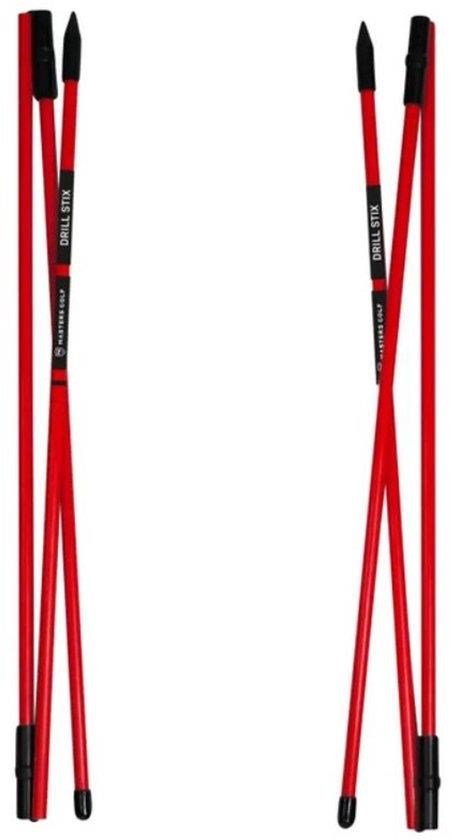
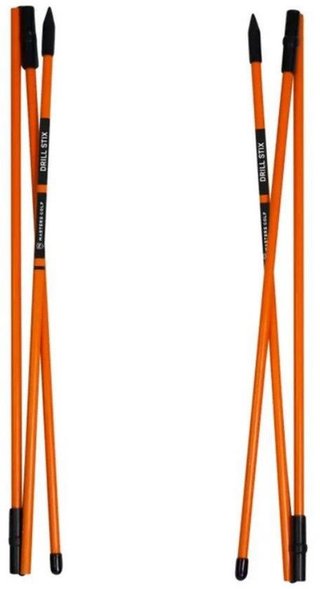
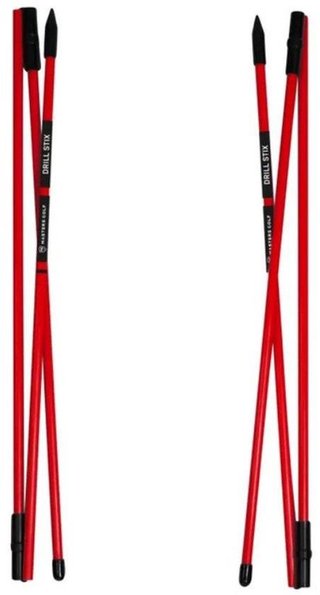
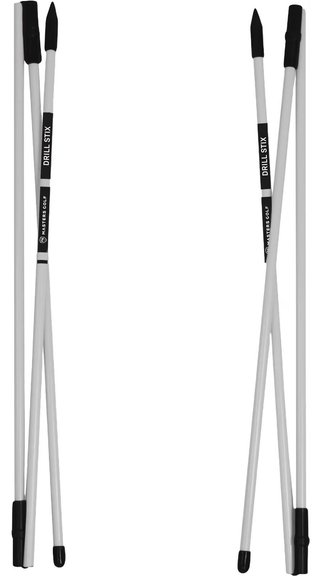
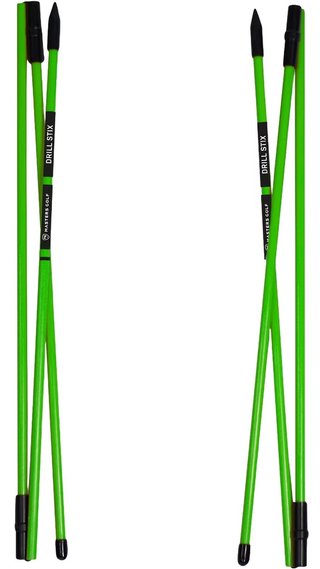
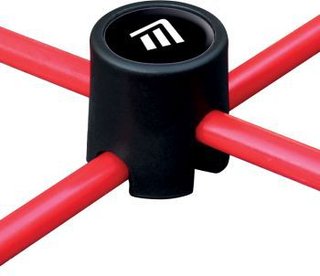
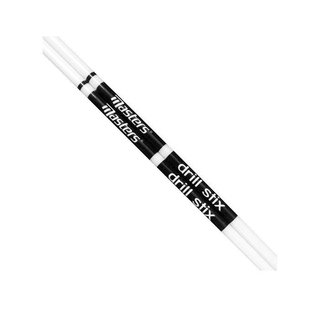
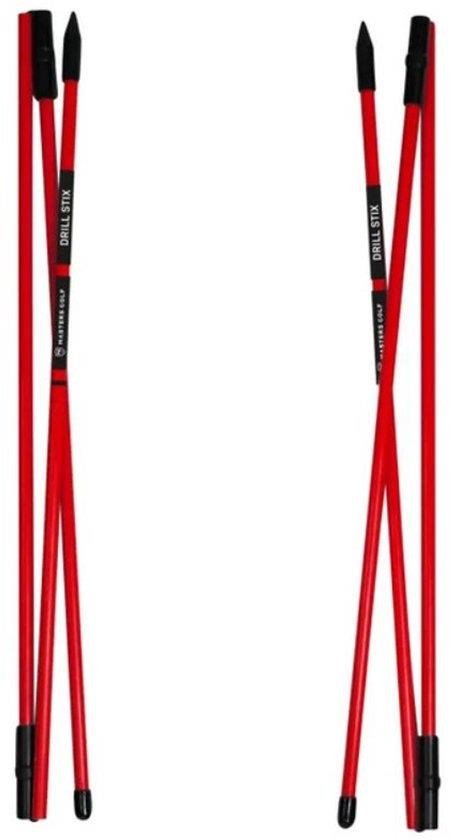
The Masters Drill Stix training rods are the ideal practice companion for any golfer looking to sharpen their technique and build consistent fundamental movement patterns. Used correctly, they provide reliable visual reference points to help you achieve proper alignment, correct ball position, a sound swing plane, and an accurate swing path – whether you are on the driving range or playing a practice round on the course.
Thanks to the practical tri-fold construction, you can take these training aids anywhere and work on your game at any point during your round – no need to leave them at the range.
Laying two Drill Stix parallel to each other on either side of the ball gives you an instant alignment channel referenced to your target line. You can see at a glance whether your clubface, feet, hips, and shoulders are all pointing in the same direction. The same setup makes ball position errors obvious – move the forward rod to mark the ideal contact point for each club, and your eyes will quickly learn where the ball should sit in your stance for drives, irons, and wedges alike.
Placing two rods in a T-shape or at an angle relative to your target line creates clear visual feedback for both swing direction and swing path. Consistent repetition with this configuration trains your body to feel the difference between an over-the-top pull path, an inside-out push path, and a neutral on-plane strike. This drill is effective for full shots with irons, wedges, and fairway woods, and can also be adapted for chipping practice around the greens.
Pressed into the ground at a shallow angle, the rods act as checkpoints for the position of your hands or clubhead at key moments in the swing – takeaway, halfway back, impact, and follow-through. This is a proven drill used by coaches and tour players to reinforce correct wrist conditions at impact and prevent early extension or excessive cupping of the lead wrist. Because the rods are stable in the ground, you get repeatable feedback with every swing without needing a mirror or video camera.
Resting a single rod across your shoulders and folding your arms over it is one of the most effective ways to practise the correct sequence of hip and shoulder rotation. With the rod in place you can feel immediately if your rotation is flat (losing spine tilt) or too steep (lifting out of posture). Maintaining your original spine angle through the entire swing motion becomes much easier when you have this physical reference, and the drill can be performed anywhere – even indoors – without hitting a ball.
Place two rods parallel to each other on either side of the ball, spaced at least one putter-head width apart. The rods form a gate that guides a straight, on-line putting stroke. If the putter face is open or closed at impact, or if your stroke path wanders offline, the putter will contact a rod and give you immediate tactile feedback. This drill helps groove a consistent stroke and builds confidence on short- to mid-range putts.
Position two rods perpendicular to each other to create a T or cross shape on the ground. One rod aligns to the target line while the other marks the ball position line at a right angle. This configuration provides a clear reference for swing direction, ideal ball position for any given shot, and correct foot alignment at setup. It is particularly useful when working on shots that require a specific ball position change – such as moving from a mid-iron to a driver.
Push the rods into the ground at selected positions to create fixed reference points and guides for the correct position of your hands or the clubhead at different phases of the swing. For example, place a rod just outside your lead foot to check that the club exits on the correct inside path after impact, or behind the ball to confirm you are making contact at the lowest point of your arc. These reference points turn abstract swing thoughts into concrete, checkable positions.
Place one rod across the back of your shoulders and cross your arms over it to hold it in place. Take your normal address posture and practise rotating your hips and shoulders while maintaining your original spine tilt throughout the movement. This drill isolates the rotational elements of the swing without the distraction of a club or ball, making it an excellent warm-up exercise and a reliable way to re-groove correct body mechanics after a period away from the game.
| Specification | Detail |
|---|---|
| Product Code | PE138B |
| Brand | Masters Golf |
| Model | Tri-Fold Drill-Stix |
| Quantity | 3 rods per set |
| Colour | Red |
| Construction | Tri-fold (collapses into 3 sections) |
| Intended Use | Alignment, ball position, swing plane, swing path, body rotation drills |
| Suitable For | Driving range and on-course use |
| Storage | Fits inside a standard golf bag |
No additional properties are available for this product.
Your review will help us and other customers when buying this product.