A glove should feel like a second skin, not a mitten and not a tourniquet. Two measurements and a sixty second fit test will get you there, and both of them can be done at home.
Measure your lead hand
You only ever glove the lead hand - left for a right-handed player, right for a left-hander - so measure that one.
- Palm circumference. Wrap a tape around the widest part of the palm, just below the knuckles, with the thumb excluded. Keep the hand flat and relaxed.
- Middle finger length. From the base of the finger to the tip. This decides whether you want a standard or a cadet cut.
Palm circumference is the primary number. If you are between two sizes, take the smaller one - leather relaxes about half a size in the first few rounds, and a glove that starts loose is loose for good.
Men's sizes
| Palm circumference | Inches | Size |
|---|---|---|
| 19.0 - 20.5 cm | 7.5 - 8 | S |
| 20.5 - 21.5 cm | 8 - 8.5 | M |
| 21.5 - 23.0 cm | 8.5 - 9 | ML |
| 23.0 - 24.0 cm | 9 - 9.5 | L |
| 24.0 - 25.5 cm | 9.5 - 10 | XL |
| 25.5 - 26.5 cm | 10 - 10.5 | XXL |
Ladies' sizes
| Palm circumference | Inches | Size |
|---|---|---|
| 15.0 - 16.5 cm | 6 - 6.5 | S |
| 16.5 - 18.0 cm | 6.5 - 7 | M |
| 18.0 - 19.0 cm | 7 - 7.5 | L |
| 19.0 - 20.5 cm | 7.5 - 8 | XL |
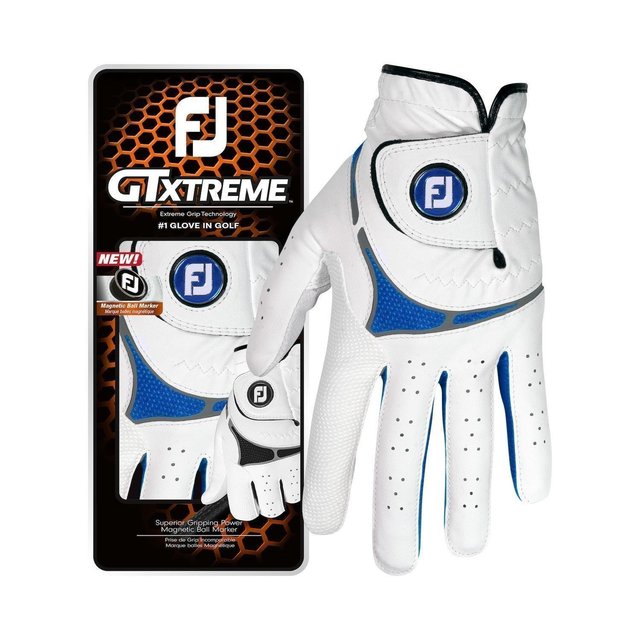
Sizes are not standardised between brands - a FootJoy M and a Mizuno M are cut on different patterns. Treat the table as your starting size and the fit test below as the decision.
Cadet sizes
A cadet glove has a standard palm width with shorter fingers. If your palm measures a full size but the fingertips of a normal glove bunch up with spare material, you want cadet - listed as ML Cadet, L Cadet and so on.
It is more common than people realise, particularly among players with broad, short hands. If you have spent years pulling the fingers of a glove flat before every shot, try one.
The sixty second fit test
- Put it on and work each finger down so the seams sit between your fingers, not on top of them.
- Fasten the wrist tab. It should close around the middle of its travel - stretched right to the end means the glove is too big.
- Look at the palm. There should be no loose fabric anywhere. A wrinkle across the palm is a glove one size too large.
- Check the fingertips. Your fingers should reach the end without pressing hard into it - a few millimetres of space, no more.
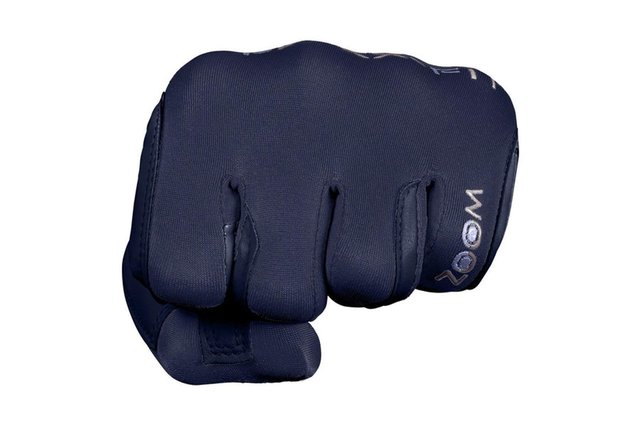
- Make a fist and take a slow swing. It should feel snug and slightly tight, not restrictive across the knuckles.
Juniors
Junior gloves are sold in small, medium and large, sized by hand length rather than by age. Measure the same way as an adult, and expect to re-buy at least once a season while they are growing. A junior glove that is too big teaches a strong grip pressure to compensate, which is a habit worth not starting.
What to take away
- Measure palm circumference below the knuckles on the lead hand.
- Between sizes: go smaller. Leather relaxes, it does not shrink back.
- Short fingers and a wide palm means cadet, not a size up.
- The wrist tab should fasten mid-travel, and the palm should show no wrinkles.
Sizes are listed on every product in men's, ladies and junior gloves.