An electric trolley does not improve your swing. It saves the energy you would otherwise spend dragging 15 kg up the 14th, and most people find that shows up on the back nine rather than the front.
1. How hilly is the course you actually play?
On flat or gently rolling ground almost any electric trolley will do the job. On a genuinely hilly course, look for DHC - DownHill Control. The wheels stay coupled to the motors, so the trolley holds the speed you set on the way down instead of running away with itself and being braked by you.
Without DHC, a heavy trolley on a steep hole is more work than a manual one, not less. On some Motocaddy and MGI models you can tell from the tyres: smooth tread means no DHC, a coarse tread means DHC is fitted. Big Max, JuStar, JuCad and Davies Caddy build it in across the range.
2. Where does it have to live?
Folded size matters more than most buyers expect, because it decides whether the trolley gets used. Measure your boot before you order, with whatever else normally lives in there.
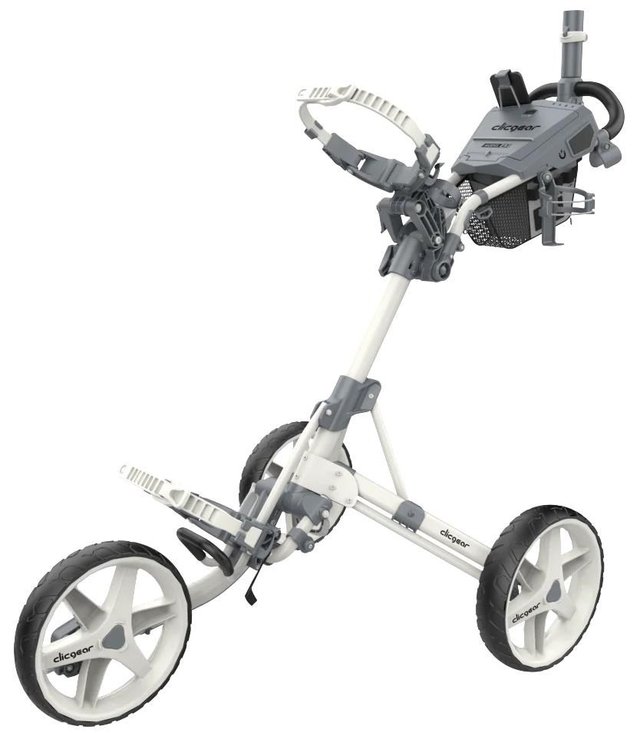
Push trolleys fold flat and small. Among the electrics, the compact models fold down to a size that fits a small hatchback, and one or two are designed to travel by air alongside your clubs. Motocaddy and MGI models are more substantial folded - still no bigger than an average manual trolley, but not pocket-sized.
3. What does the battery need to do?
Lithium is now standard, which means no special care routine and a pack that lasts years rather than seasons. Most manufacturers quote a single capacity rated with headroom for 36 holes; Motocaddy splits its range into Standard and Ultra for longer days.
Two things to check. First, how the battery comes out - being able to remove it with the trolley folded saves a lot of bending over in a car park. Second, charging time, because a battery that needs most of a day is awkward if you play consecutive rounds.
4. Which extras will you genuinely use?
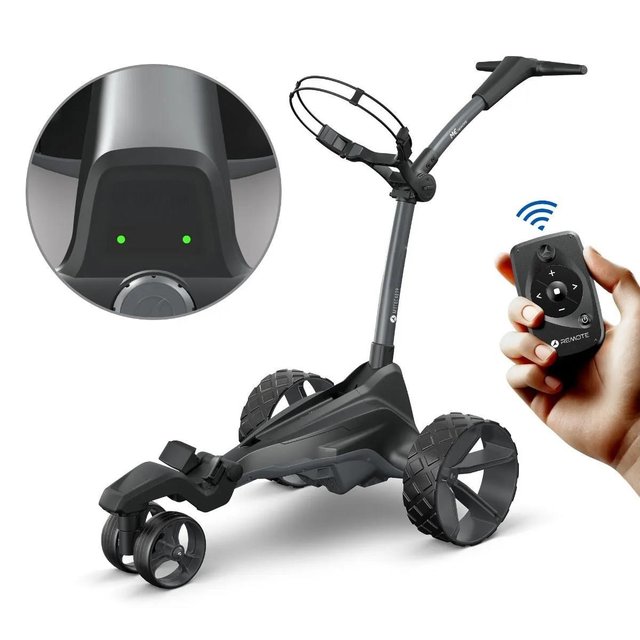
Integrated GPS exists on the higher Motocaddy models and is genuinely convenient if you would otherwise carry a device. MGI tends to price lower and give you a holder for the phone or GPS you already own. Remote control is standard on some models and a paid option on others - it is a luxury on flat ground and useful on holes where you want to send the trolley ahead.
JuStar and JuCad run manual handle control as standard with excellent ergonomics, and offer a remote at extra cost.
5. Push or electric, in one table
| Push trolley | Electric trolley | |
|---|---|---|
| Weight to lift into the car | Roughly 7-10 kg | Roughly 9-14 kg with battery |
| Hills | You provide the power both ways | Motors up, DHC down |
| Maintenance | Wheel bearings, occasionally | Battery charging, wheel clutches, connectors |
| Folded size | Smaller | Larger, varies a lot by brand |
| Makes sense when | You play occasionally, or the course is flat | 18 holes weekly or more, hilly ground, back or knee trouble |
What comes in the box - and what does not
A trolley normally arrives as frame, wheels, battery and charger. The things you will want within a fortnight are sold separately by essentially every brand: scorecard holder, umbrella holder, drinks holder, and a transport bag to keep the boot of the car clean.
Service matters more than it does on most golf equipment, because a trolley is the one thing in your kit with moving parts and electronics. Spares availability and a repair route in Europe are worth more over five years than a small saving at purchase.
What to take away
- Hilly course: insist on DHC, or the downhills undo the benefit.
- Measure your boot before you choose - folded size decides whether you use it.
- Lithium is standard; check how the battery comes out and how long it charges.
- Budget for the holders and the transport bag, they are never included.
Compare push and pull trolleys, electric trolleys, and the trolley accessories that make either one usable.