Airlines break clubs at the top of the bag, almost always the driver. A travel cover is not about looking smart at check-in; it is about padding, a solid base and packing the thing properly.
Soft, semi-rigid or hard
Soft covers are padded fabric. They are light, they fold away into nothing at the other end, and they are the easiest to store at home. Protection depends entirely on how much padding is in the top section and how you pack it.
Semi-rigid covers add a moulded base and often stiffening down the sides. This is the sweet spot for most people who fly two or three times a year.
Hard cases give the most protection and the least flexibility - they are bulky at home, heavy before you have put anything in, and awkward in a small hire car. If you travel with expensive irons regularly, they still make sense.
Size: pick one class up from what you think you need
| Class | Holds | Best for |
|---|---|---|
| Small | One bag, clubs, very little else | Stand bag, light traveller |
| Medium | Larger bag plus shoes and some clothing | The usual choice for a week away |
| Large | Two smaller bags, or one big bag and everything else | Couples and buggy trips |
Do not buy a cover your bag only just squeezes into. Padding needs slack around it, and a cover packed to bursting transmits every knock straight through to the clubs.
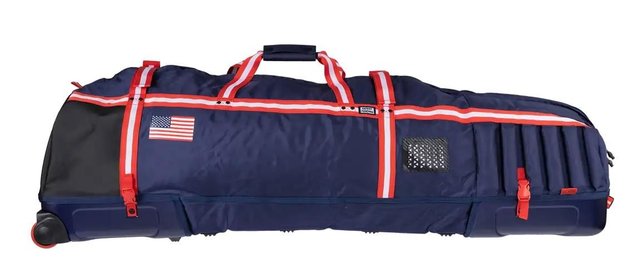
Wheels and base
This is the part people underrate. Two wheels means tilting and dragging the whole way. Four wheels on a wide base lets you push it upright, which changes the experience of moving a 20 kg case across an airport completely.
Look at wheel size and whether they are recessed enough to survive a baggage belt, and check the base is broad enough that the case stands on its own when you let go of it.
Padding, stitching and zips
Cheaper covers mean thinner padding and lighter stitching - which is fine for one trip a year in the boot of a car, and less fine for weekly hold baggage. The things worth paying attention to:
- Padding depth at the top, where the driver head sits.
- Double stitching or bar tacks at the handles and wheel mounts, the two places that fail first.
- A heavy-gauge zip with a storm flap, plus lockable pullers.
- Internal compression straps - a load that cannot move around inside cannot build up momentum.
Pack it like it will be dropped
Because it will be. The routine that works:
- Slide the driver head down below the top of the bag, or take the head off if it has an adjustable hosel and pack it separately.
- Headcovers on everything, then a towel or your waterproof jacket wrapped over the top of the shafts.
- A support rod - the "stiff arm" type, or a broom handle cut to length - standing above the longest club to take the vertical impact.
- Clothes and shoes packed round the heads, not in a neat pile at the bottom.
- Name and phone details on a tag outside and on a card inside.
- Rangefinder, GPS and anything else you would miss goes in hand luggage.
What to take away
- Buy one size up from what your bag needs - the spare space is the padding.
- Four wheels and a wide base is the single upgrade you will notice every trip.
- The driver head must never be the highest thing in the cover.
- Handles and wheel mounts fail first; check the stitching there.
Compare sizes and constructions in travel bags and travel covers.