Trolleys are the one part of your kit with bearings, motors and electronics, so brand choice is partly about the product and partly about who will still supply a spare wheel clutch in four years.
What actually separates them
- Fold mechanism. How many actions, and how flat it ends up. This is what you interact with twice every round.
- Frame material. Steel tube, aluminium, titanium or carbon. It sets weight, price and how it survives a winter of being hosed down.
- Downhill control on electrics. Present or absent. On hills it is the difference between a helper and a burden.
- Accessory ecosystem. Whether holders, brackets and rails are designed in or bolted on afterwards.
- Spares and service. The boring criterion that decides whether you keep it for eight years or bin it after three.
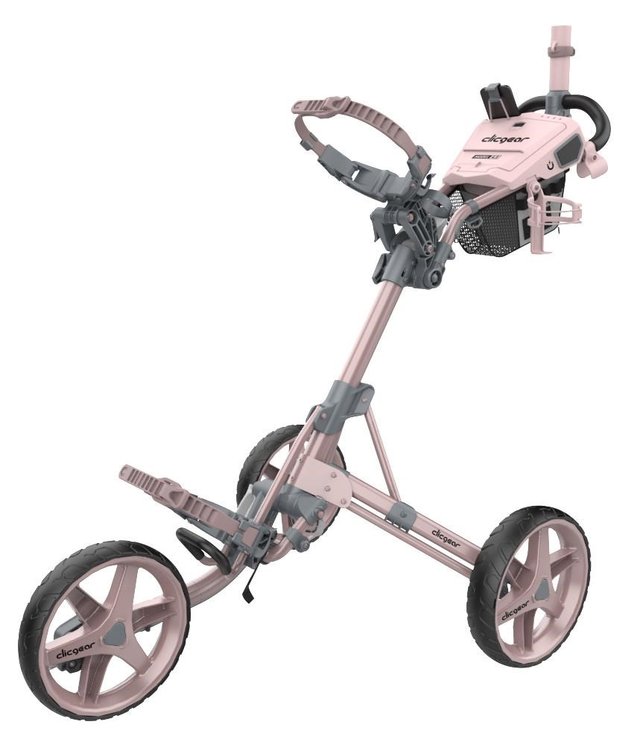
Push trolleys
| Brand | Character | Worth knowing |
|---|---|---|
| Clicgear | Three and four-wheel push trolleys with a well-known folding frame | The bracket and rail ecosystem is the reason most people buy one - there is a holder for almost anything. Solid tyres, sealed bearings. |
| Big Max | Flat-folding aluminium frames, light for their size | Folds to an unusually thin package, which is the reason most people buy one. |
| JuCad | German-built, aluminium, titanium and carbon frames | The Travel models fold small enough to fly with your clubs. Premium construction and priced accordingly. |
| Davies Caddy | Compact folding, straightforward engineering | Folds small; heavier than the aluminium competition. |
Electric trolleys
| Brand | Character | Worth knowing |
|---|---|---|
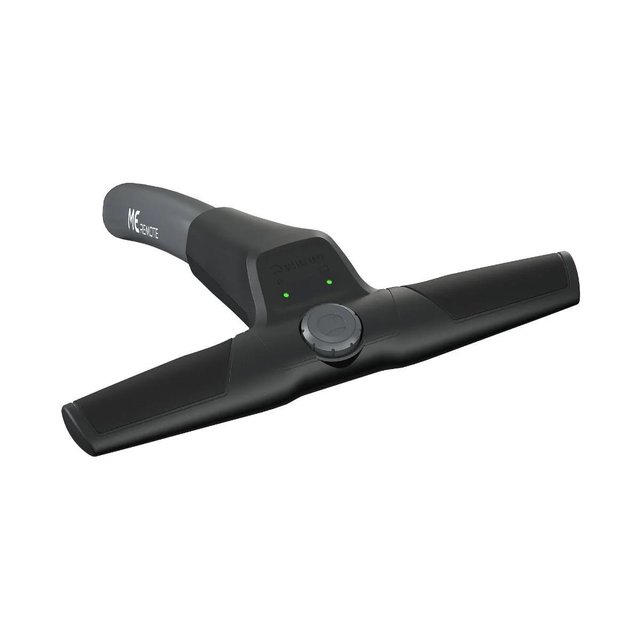
| Motocaddy | Broad range from simple to fully loaded | Integrated GPS on the higher M-series models, remote on the top spec. Battery in Standard and Ultra capacities. Larger folded than the compact brands. |
| MGI | Value-led, well equipped | Phone and GPS holder built in, battery that lifts out with the trolley folded, and a remote model that works reliably. |
| Big Max | Ultra-flat folding electrics | The e-Lite folds flatter and with fewer actions than the rest of this group, and it is straightforward to operate on the course. Downhill control across the range. |
| JuStar | German, titanium frames, strong ergonomics | Manual handle control as standard, remote available at extra cost. Downhill control fitted throughout. |
| JuCad | Premium German build, very compact folding | The Travel line goes on the plane with your travel cover. Remote optional. |
| Davies Caddy | Compact and more affordable | Premium model folds small; heavier and a little slower than the German equivalents. |
Downhill control is the single specification most likely to be missed at the point of purchase. Big Max, JuStar, JuCad and Davies Caddy have it built in throughout; within the Motocaddy and MGI ranges it varies by model, and on several of them the tyre tread tells you which version you are looking at - smooth means no DHC.
Why the range here is deliberately narrow
There are plenty of other makes on the market, and several are perfectly good. We stock a short list on purpose, chosen around two things: parts availability across Europe, and a repair route that does not involve shipping a trolley to another continent. A motor or a gearbox will eventually need attention, and a brand with thin distribution turns that into a long wait.
Choosing between them without overthinking it
- Smallest possible boot. Big Max or JuCad Travel.
- Most technology for the money. MGI, then Motocaddy if you want GPS on the handle.
- Hilly member's course, played weekly. Anything with proper downhill control - and check the specific model, not just the brand.
- Push trolley with lots of accessories. Clicgear, on the strength of the bracket ecosystem alone.
What to take away
- Fold size and downhill control decide more day to day than the badge does.
- German-built compact trolleys cost more and fold smaller; UK and Australian brands give more features per euro.
- Check spares and service before you buy - it is a machine, not a club.
- Accessories are always separate, whichever brand you pick.
The full range sits in push and pull trolleys and electric trolleys.