Choosing the right club length - and the lie angle that comes with it
Height gets you into the right area, but wrist-to-floor does most of the work - and lie angle has to move with the length. Here is how to measure yourself properly and what the numbers actually change.
Two measurements, not one
Standard men's and ladies' lengths are built around an average body, and roughly two thirds of golfers land inside that band. The problem is the other third, who buy standard anyway.
Measure both of these, in the golf shoes you play in:
Height. Against a wall, heels down, no slouching.
Wrist-to-floor. Stand relaxed with your arms hanging, and measure from the crease of the wrist to the floor.
The second one is the useful one. A 185 cm player with long arms often plays standard perfectly happily, while a 178 cm player with short arms is genuinely better off half an inch longer.
A starting point, not a prescription
Standard men's 5-iron is 38 inches, standard ladies' 37 inches, and it drifts a little between brands and even between models. Use this as your first guess:
Height in golf shoes
Length vs standard
Note
Under 160 cm
-1 inch
Ladies' or junior spec is usually the better base
160-170 cm
-0.5 inch (men)
Ladies of this height: standard ladies' length
170-185 cm
Standard
Ladies 160-175 cm: standard ladies' length
185-190 cm
+0.5 inch
Check lie at the same time
190-196 cm
+1 inch
Over 196 cm
+1.5 inch
Custom order territory
Cross-check it against wrist-to-floor. For men, roughly 86-91 cm (34-36 inches) is the band that lands on standard length, and every 2.5 cm outside it is worth about half an inch. Ladies' charts run the same way against ladies' standard. Where a brand publishes its own chart - Ping's colour codes are the best known - use that one instead of a generic table.
Measure in golf shoes, not socks or trainers. A golf sole adds enough to move you across a band, and every manufacturer's chart assumes you are wearing them.
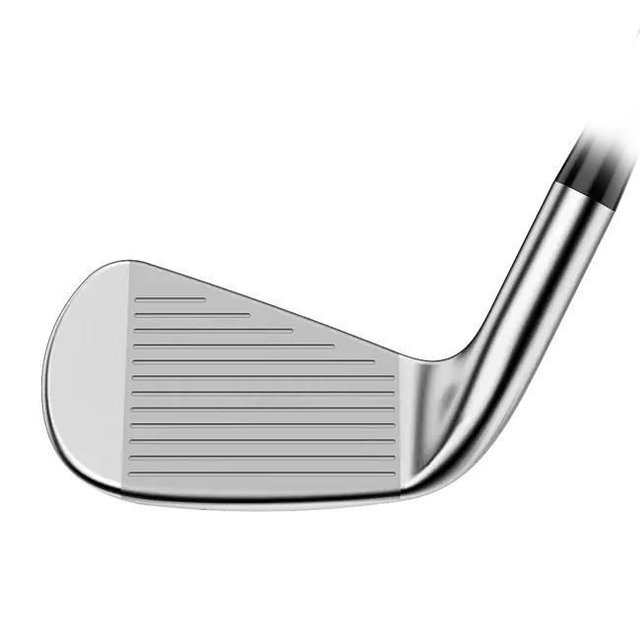
Sole flat on the turf at impact is what you are chasing. That is lie angle, and it changes when length changes.
Lie angle: the spec people forget
Lie is the angle the shaft makes with the ground when the sole sits flat. The more upright the lie, the closer to your feet the head sits at address - which is why the two specs travel together: a longer club generally wants a more upright lie, a shorter one a flatter lie.
As a rule of thumb, every half inch of extra length is paired with about one degree more upright lie to keep the sole sitting properly.
Getting it wrong shows up on the face, not the flight chart. Too upright and the face points left at impact - pulls and hooks. Too flat and it points right - pushes and weak fades. It matters most in the wedges and short irons, where more loft means the face direction is amplified.
You can check it in five minutes on a lie board: draw a line up the sole with a marker, hit off the board, and see where the scuff sits. Towards the toe means too flat, towards the heel means too upright.
Package sets, ladies and juniors
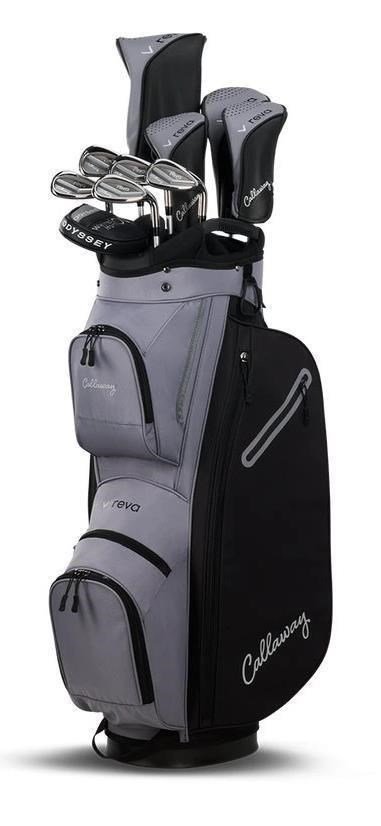
Package sets are built to standard men's or ladies' length, and many are offered in a longer or shorter build as well. If you are outside the band, buy the length option rather than assuming you will adapt.
Juniors get sized by height, never by age, and they outgrow a set in twelve to eighteen months. Re-measure every spring - a club that has become an inch short forces a junior into a hunched posture that is a nuisance to undo later.
Package sets usually come in more than one length build. Choosing the right one costs nothing extra.
Changing clubs you already own
Shortening is straightforward: the shaft is trimmed at the butt end and regripped. Be aware it makes the head feel lighter, because you have removed swingweight along with the length. Extending is done with an extension plug, which works well in steel and is more limited in graphite.
Lie can be bent on forged irons without drama. Cast heads normally tolerate a couple of degrees and no more, and graphite shafts cannot be bent at all - on graphite-shafted irons your lie is what you ordered.
What to take away
Height plus wrist-to-floor, measured in golf shoes. Neither one on its own.
Standard fits most people, but not the shortest or tallest third.
Change length and you change lie - about one degree per half inch.
Juniors: re-measure every season, and buy the length, not the age label.
Once you know your build, compare specs in irons or in the ready-made package sets.