Spiked shoes grip better on wet, sloping ground. Spikeless shoes are more comfortable and you can walk into the clubhouse in them. That is the whole argument - the rest is about how and where you play.
What the two actually are
Spiked means replaceable spikes, screwed into threaded receptacles in the outsole. Modern soft spikes are plastic with several flexible legs, they bite into turf, and when they wear out you unscrew them and fit new ones. Metal spikes are long gone - effectively every club in Europe bans them for what they do to greens.
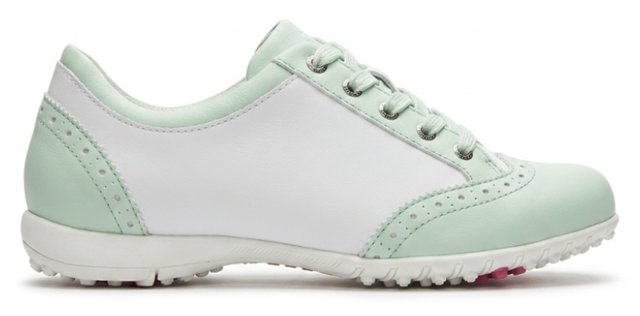
Spikeless means a moulded outsole with rubber lugs, nubs or a dense tread pattern. Nothing to replace, nothing to lose mid-round, and the sole is flat enough to be worn off the course.
Traction, honestly assessed
In dry summer conditions on a flat course, a good spikeless outsole gives you all the grip you need. Nobody loses a shot on the 5th because of their soles in August.
The difference shows up in three places: wet turf, side slopes, and winter. On a soaked fairway, or standing on a downslope in a fairway bunker, a spike that penetrates the surface does something a rubber lug cannot. If your swing is aggressive and you drive hard off the back foot, you will feel that difference sooner than a smooth swinger will.
Comfort, weight and how far you walk
Spikeless shoes are lighter, more flexible and feel closer to a trainer. Over 18 holes plus a range session that is a genuine benefit, particularly if you have any history of foot trouble. They are also the obvious choice for a golf trip where you would rather pack one pair of shoes than two.
Spiked shoes are heavier and stiffer, and the stiffness is partly the point - a firmer platform under a fast swing. Modern models have narrowed the comfort gap considerably, but they will never feel like a running shoe, and you should not walk on hard flooring in them if you want the spikes to last.
Which one, for whom
| You | Choose | Why |
|---|---|---|
| Play mostly in summer, flat course, carry or push | Spikeless | Grip is sufficient, comfort is better, one pair does everything |
| Play all season, hilly course, wet winters | Spiked | Traction on slopes and soft ground, replaceable when worn |
| Fast, aggressive swing, low handicap | Spiked | Firmer platform, no slip in transition |
| Range and practice-heavy, lots of walking on paths | Spikeless | Spikes wear quickly on hard surfaces |
| Travelling golfer | Spikeless | Wear them to the airport, play in them, done |
Looking after them
- Change soft spikes when the legs are visibly worn or splayed - most makers say every 15 to 25 rounds, and sooner if you walk on paths and car parks in them.
- Keep the supplied spike wrench. A spike left in for three seasons in a wet climate can seize into the receptacle.
- Clean mud out of the outsole after wet rounds, spiked or not. Blocked tread has no grip at all.
- Dry them at room temperature with paper inside, never on a radiator - heat is what cracks an outsole and shrinks a waterproof membrane.
- Most branded golf shoes carry a waterproof warranty of one or two years depending on the model. Check the term before you buy if you play in the wet, and keep the receipt.
What to take away
- Summer, flat, dry: spikeless is plenty. Winter, hills, wet: spiked.
- Metal spikes are effectively banned everywhere - soft spikes only.
- Change spikes every 15-25 rounds, and never walk on tarmac in them.
- Dry at room temperature; a radiator will kill the waterproofing.
Compare both types in men's golf shoes and ladies golf shoes.