





















A traditional-looking iron can hide a remarkably untraditional interior. With 3D printing, designers can build a fine lattice inside the head and put the saved weight where it helps most. That is why 3D printed golf clubs are worth understanding: the interesting part is often the part you cannot see.
How does 3D printing a golf club work?
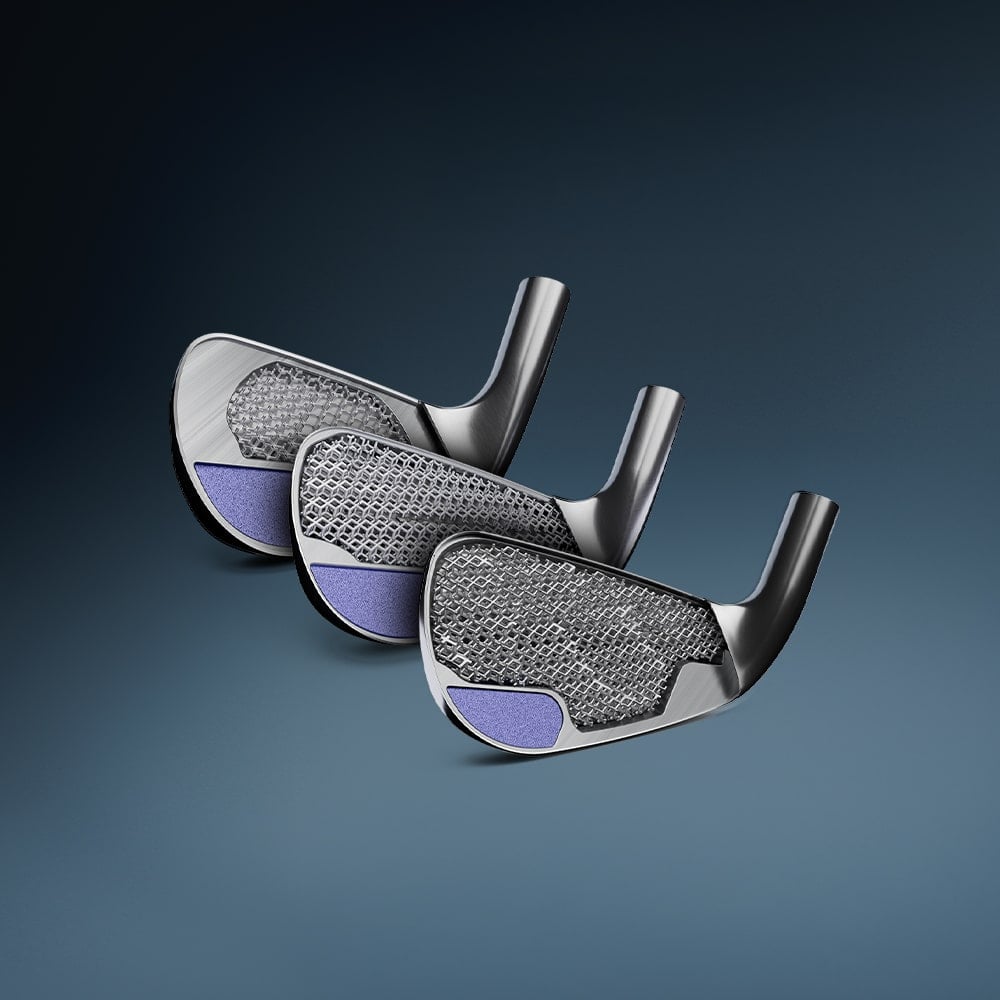
3D printing, also called additive manufacturing, builds a component layer by layer from a digital design. In Cobra’s 3DP irons, lasers fuse stainless steel powder into the clubhead. The manufacturer describes a build of around 2,600 layers. This is industrial metal manufacturing, not a plastic model made on a desktop printer.
The freedom lies inside the head. A lattice can replace some of the solid material while leaving room to tune weight distribution. Designers can combine the printed structure with separately fitted weights and other components. The label ‘3D printed’ therefore needs context: it can describe a metal head, an internal polymer part or a prototype used during development.
Why the internal structure matters to your golf
Think of the head as having a limited weight budget. Material saved in one place can be used elsewhere. Moving weight towards the perimeter can increase resistance to twisting on an off-centre strike; changing its vertical position can affect launch. Engineers describe these properties through moment of inertia (MOI) and centre of gravity (CG).
The appeal is a combination that is difficult to judge from a photograph: a compact profile with more help on imperfect contact. But the manufacturing method alone does not guarantee longer or straighter shots. Loft, face design, shaft, strike location and the way the club fits your swing still matter.
COBRA · 3DP Tour · COBRA · 3DP MB / 3DP X / 3DP Tour
Cobra: 3D printed irons and a different approach in putters
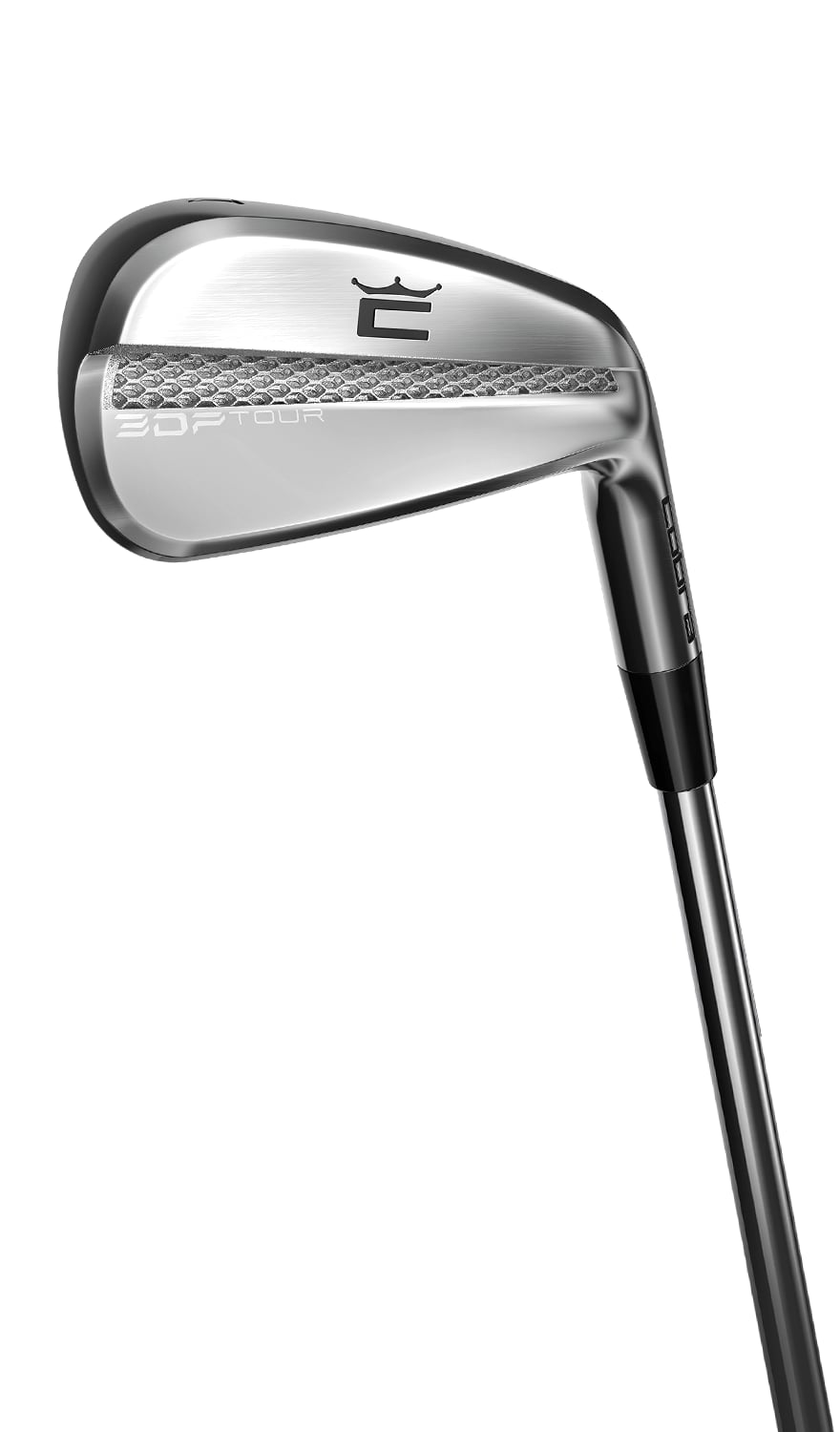
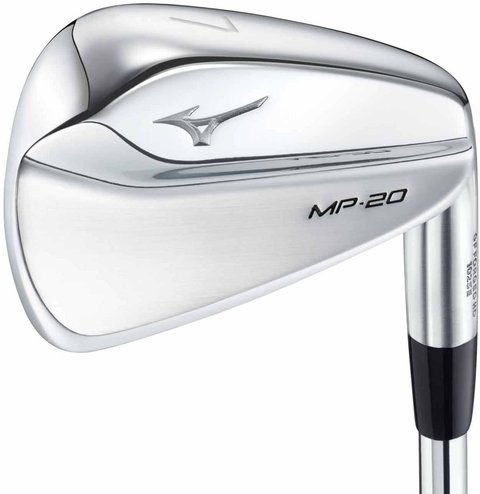
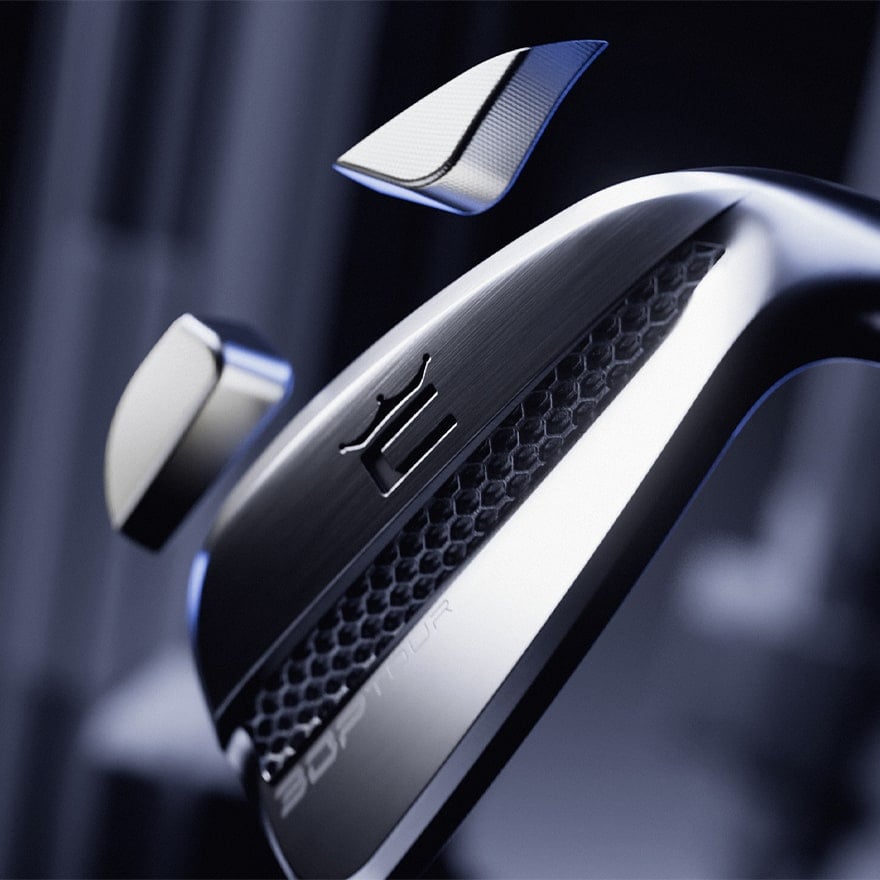
Cobra’s current iron family includes 3DP Tour, 3DP MB and 3DP X. The idea is not to give every golfer the same head: the range offers different shapes and performance priorities, from a blade-style profile to a more distance-focused design. Its internal lattice gives the designers more freedom to arrange mass without making the entire head larger.
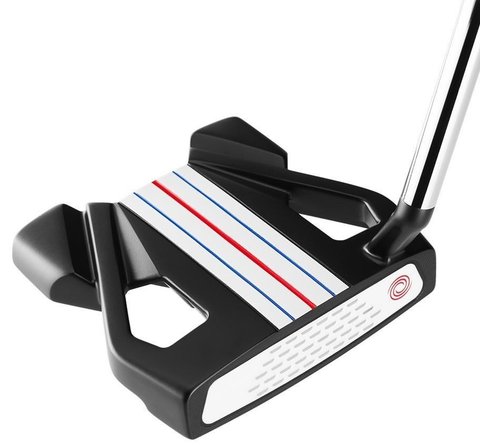
Putters show why the terminology deserves care. The Cobra 3DP TOUR AGERA RS, for example, uses an internal 3D printed nylon lattice in a construction that also includes a milled stainless steel face. That is different from printing a metal iron head. Both use additive manufacturing, but the material and the job of the printed part differ.
COBRA · 3DP MB / 3DP X / 3DP Tour · COBRA · 3DP TOUR AGERA RS
Video: Cobra explains its 3D printed Tour irons

Official COBRA Golf video in English. The article above explains the key principles in your language. Watch the video on YouTube.
Callaway: a $15 million investment in titanium 3D printing
On 6 November 2026, Callaway announced a $15 million investment in a facility in Fort Worth, Texas. It is intended to expand the company’s titanium research and manufacturing capabilities. Callaway says it has spent about seven years developing additive manufacturing and has made prototypes and custom models in-house since late 2022.
The planned timetable matters: the facility is expected to be operational in mid-2027 and to support part of the company’s US product needs in 2028, initially focusing on custom titanium products. These are company plans, not guaranteed delivery dates. The announcement does not name a new retail club model or give a European launch date.
Beyond Cobra and Callaway: Sub 70 and Avoda
Sub 70 offers another application in its TAIII 3D driver. The manufacturer describes a one-piece 3D printed titanium body, developed in collaboration with Tommy Armour III. It is a useful reminder that the technology is relevant to drivers as well as irons and putters.
Avoda illustrates the speed of development. In a 2024 interview, founder Thomas Bailey explained that 3D printing let the team rapidly prototype the unusual hollow heads developed for Bryson DeChambeau. This was an individual project; it should not be read as a claim that every Avoda iron is 3D printed.
Sub 70 · TAIII 3D · Avoda / Thomas Bailey · GolfWRX · 3. 7. 2024
3D printing, forging and casting: what is the difference?
These are manufacturing routes, not a ranking from best to worst. Clubs can combine several processes, and machining or finishing may follow the main manufacturing step. Compare the finished equipment on the same basis.
| Method | How the shape is created | What to look at as a golfer |
|---|---|---|
| 3D printing | A component is built up in layers; suitable processes allow intricate internal structures. | What is printed, where the weight is placed and whether the finished club suits you. |
| Forging | Metal is shaped under pressure, then finished. | Head shape, construction and impact feedback; the word ‘forged’ is not a full performance specification. |
| Casting | Molten metal takes the shape of a mould, then the component is finished. | The whole design and its results; casting alone does not determine quality or forgiveness. |
Should your next clubs be 3D printed?
Start with the problem you want to solve. If you like a compact iron but lose too much performance on slightly off-centre contact, the design possibilities are particularly interesting. If your current clubs already produce reliable distances and a suitable flight, a new manufacturing label is not a reason to replace them by itself.
In a fitting or comparison session, look beyond the longest shot. Compare carry distance, dispersion, launch, spin and descent, and include imperfect strikes. Check equivalent lofts and suitable shafts: the same number on two irons does not necessarily mean the same loft. Choose the club that makes your typical shot more useful.
Frequently asked questions about 3D printed golf clubs
Are 3D printed golf clubs made of plastic?
Some designs use a printed polymer component, such as a nylon lattice in a putter. Other designs use printed metal, including stainless steel irons and titanium driver bodies. Always check the construction of the specific model.
Is the whole golf club printed in one piece?
Usually the claim refers to the head or one of its components. A printed head still needs to become a complete club with a shaft and grip; weights or other parts may also be assembled separately.
Are 3D printed clubs automatically more forgiving?
No. Printing gives designers additional options for positioning mass, but forgiveness depends on the finished design. Compare the actual models and the results of your own strikes.
Can I already buy 3D printed golf clubs?
Yes. Cobra has a retail range of 3D printed irons and putters, and Sub 70 lists its TAIII 3D driver. Availability, specifications and configurations vary by market. Callaway’s new facility announcement is a separate development plan, not a retail launch.
Explore the right equipment for your game
Compare golf irons, putters and Cobra equipment in our range. Current prices and available configurations are shown on the relevant product pages.
Information checked on 7 November 2026.