






















Lie angle affects how the clubhead tilts relative to the ground at impact and can influence where the ball starts. You cannot therefore choose it from height alone or simply by resting the club behind the ball. This guide explains what static measurements tell you, what needs checking during the swing and what to ask at a fitting.
What lie means, and what upright and flat describe
Lie is the angle between the shaft axis and a horizontal reference plane with the head correctly positioned. A higher angle is more upright; a lower angle is flatter. You will commonly encounter these specifications when choosing irons and having them fitted.
“2° upright” normally means two degrees above that model’s standard. If its standard lie were 62°, the result would be 64°. This is an arithmetic example, not a recommendation for a particular player height. Without the baseline specification, the same label cannot safely be transferred to another model or brand.
Do not confuse lie with club loft, the face angle. Here we are concerned mainly with the head’s sideways tilt and its relationship to your swing, rather than distance gaps in the bag.
How an unsuitable lie can affect direction
For a right-handed golfer, a club that is too upright at impact, with the toe raised and heel lower, can contribute to a leftward start. A club that is too flat, with the toe lower, can contribute to a rightward start. These directions reverse for a left-handed golfer. The impact position matters, not the club’s appearance at address.
Shot direction alone does not diagnose the cause. Alignment, face angle or swing path can produce the same result. Striking the ball on the toe of the face is also different from the toe of the head pointing down towards the ground.
| What you repeatedly observe | What to investigate | What it does not yet prove |
|---|---|---|
| Well-struck shots start mostly on one side of the target. | Alignment, face angle, club path and lie at impact. | That bending the clubs immediately is the correct solution. |
| A diagnostic sole mark often appears towards the heel or toe. | Whether the mark repeats and agrees with ball flight. | That a single mark gives the exact adjustment in degrees. |
| Shots change after lengthening or shortening the shaft. | Length, posture, impact location and dynamic lie with the new configuration. | That the old setting remains correct or that length converts to lie through a fixed formula. |
Bring a description of the recurring problem to a club fitting, rather than a predetermined adjustment. Explain whether it affects all your irons or, for example, only the short irons.
Static measurements: a useful start, not the final answer
Static fitting measures height and wrist-to-floor distance. Two equally tall players can have different arm lengths, so height alone is incomplete information. The measurements help select a starting length and lie for the test club.
The PING Color Code Chart uses height and wrist-to-floor distance. Its colours belong to PING’s system and baseline specifications; it is not a universal chart for every brand. Test the recommended combination through shots rather than ordering solely from a box on the chart.
Treat the chart as an initial proposal. A photograph of your address position cannot by itself confirm how the club will arrive at the ball during a normal swing. Changing your posture just to make the sole look level at rest does not establish that the club suits your game either.
Dynamic checks: what happens at impact
A dynamic check examines the club during an actual shot. Your hands may not return to their address height, and the shaft bends during the swing. A setting that looks right at rest may therefore be unsuitable at impact.
Depending on the method, a fitter may use a lie board and sole mark, or a vertical ink line transferred from the ball to the face. Suitable measuring equipment can provide further information. Interpret the result alongside impact location and repeated ball flight, rather than in isolation.
Ask what the numbers on a monitor actually mean. Trackman defines Dynamic Lie as the angle of the lower shaft relative to horizontal at impact. It is not automatically an instruction for how many degrees to bend a club, nor is it interchangeable with a manufacturer’s colour code.
Compare the original and proposed configurations over several normal shots. One good ball is not enough reason to change an entire set; one poor ball does not establish an unsuitable lie either.
Why length and lie must be considered together
Extending a shaft is not the same as bending the hosel. It changes the length you address the ball with, however, and may change posture and delivery. Recheck dynamic lie after changing length.
There is no universal instruction such as “always compensate for half an inch of length with a particular number of degrees” that reliably fits every golfer. The fitter must consider results with the specific head-and-shaft combination. Our club length guide explains the relationship with a comfortable setup.
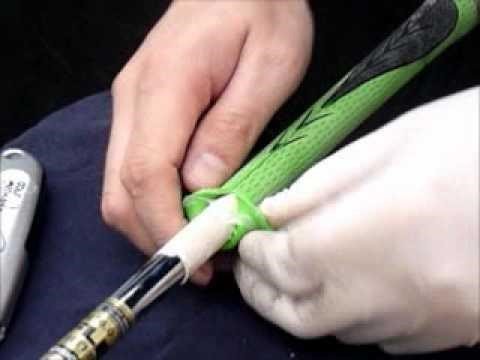
Record actual length and model specifications when comparing clubs, not just the word “standard”. Mention whether you normally grip down or are changing your grip technique. Our separate grip selection guide covers grip size and comfort; this information helps a fitting but does not itself determine lie.
A result with one test club does not automatically validate all the others. Agree how to check a longer iron, a shorter iron and your wedges, especially in a blended set. The aim is a useful set for your game, not identical adjustments at any cost.
A checklist for lie-angle fitting
Bring your own clubs, golf shoes and any previous fitting record. For a used set, mention known extensions, shortening or bending; say when the history is unknown. The fitter can then avoid relying only on catalogue standards.
| Stage | What to ask about or record |
|---|---|
| Before testing | The exact model, length and starting lie of your clubs; which figures were measured and which came from specifications. |
| During comparisons | Which parameter changed and what happened to start direction, dispersion and impact location. |
| Before ordering or adjustment | The recommended lie in degrees, or an adjustment from a clearly stated standard, together with length and shaft model. |
| After adjustment or delivery | A check of actual specifications and an agreed way to verify the result through shots. |
If you are making substantial technical changes with a coach, explain this beforehand. The fitter can discuss whether the proposal suits your current swing and when a further check makes sense. You need not wait for a perfectly repeatable swing, but should understand which shots support the recommendation.
Why not bend irons at home after watching a video?
Adjustability depends on the material, construction and condition of the particular head and hosel. Some cast heads can be adjusted professionally, while “forged” does not guarantee unlimited bending. There is no shared safe degree limit for all forged or all cast models.
Steel alloys differ in hardness and heat treatment; hosel shape and length matter too. The decision is not based solely on whether the head was cast or forged. For a hollow or multi-material head, check the exact model rather than a similar-looking iron.
Before work begins, the workshop needs to confirm model suitability and manufacturer restrictions. Correct positioning and clamping, and measurements before and after the change, matter. Poor technique can damage the finish or hosel and change loft as well as the intended lie; professional work does not eliminate all risk of damage.
If the model cannot accommodate the desired change, another factory specification or another head may be appropriate. A vice and a guess from the sole cannot replace the necessary assessment. Confirm whether your clubs can be adjusted, and on what terms, before handing them over.
Summary
- Compare lie with the particular model’s specification; upright and flat require a baseline.
- Height and wrist-to-floor distance help choose a fitting starting point, not the final result.
- Check actual shots alongside start direction, dispersion and impact location.
- Recheck lie after changing length; do not automatically transfer settings between sets.
- Entrust bending to a professional workshop after assessment of the exact model and proposed adjustment.
When choosing new irons and wedges, ask about their adjustment options too. Find more topics in our golf guides.